
Christian Hospitality Ideas: Practicing Romans 12:13 in Daily Life
Find simple Christian hospitality ideas rooted in Romans 12:13, with real-life tips for home, church, and online care. For counseling, contact Pastor Richmond.
Richmond Kobe
12/6/202522 min read

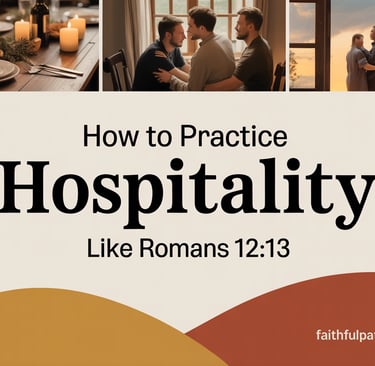
“Share with the Lord’s people who are in need; practice hospitality” (Romans 12:13). That simple command sits right in the middle of Paul’s call to live as a living sacrifice, which means it is not extra credit for ultra-gifted hosts. It is everyday Christianity in action, even in 2025 with full calendars, long commutes, and constant notifications.
Hospitality in Scripture is much more than setting a perfect table. It is making room in your life, your schedule, and your heart for other people, especially those who are lonely, hurting, or far from God. It can look like checking on a neighbor, inviting someone to sit with you at church, or sending a meal to a family that is stretched thin.
If you feel too tired, too introverted, or too busy, you are not alone. Many believers want to live their faith in practical ways but are unsure where to start or how to keep going without burning out. Learning to depend on God’s power, not your personality, is key, and resources on living empowered by the Holy Spirit can give helpful perspective for that shift.
In this post, you will find simple, realistic Christian hospitality ideas that fit real life, not an ideal one. You will see how Romans 12:13 can shape your week in small but meaningful choices at home, at church, at work, and in your community. My hope is that you finish not feeling pressured, but invited to take one next step of love that reflects the welcome you have already received in Christ.
For Christian Counseling, Contact Pastor Richmond info@faithfulpathcommunity.com.
What Romans 12:13 Really Teaches About Christian Hospitality
Romans 12:13 is short, but it carries a whole way of life: “Share with the Lord’s people who are in need; practice hospitality.” This is a call to open hands, open doors, and open hearts. It belongs with the other commands in Romans 12 about sincere love, patience, and blessing others, which means it is basic Christian living, not a special hobby for certain personalities.
When we think about Christian hospitality ideas, this verse keeps us grounded. It points us away from performance and toward simple, faithful care for real people right in front of us.
A simple breakdown of Romans 12:13 in plain language
If we restate Romans 12:13 in everyday words, it sounds like this:
“Share with the Lord’s people who are in need” means:
Take care of fellow believers when they are struggling. Treat their needs as your business too.“Practice hospitality” means:
Make a habit of welcoming people into your space and your life.
This is not theory. It touches ordinary moments:
Helping with groceries:
A single mom from church is juggling kids and bags in the parking lot. You carry her groceries to the car, ask how she is really doing, and let her know you are praying for her. That is sharing with a sister in need.Offering a room or couch:
A college student in your church loses housing right before exams. You have a spare room. You invite him to stay for a few weeks while he sorts things out. No fancy setup, just clean sheets, a listening ear, and a place at the table.Inviting someone for a simple meal:
There is a widow who leaves church alone every Sunday. You invite her home for soup and sandwiches. You do not stage your house. You sit at the same messy dining table your family uses, talk about the sermon, and listen to her stories.Sharing money or a ride:
A brother in Christ cannot afford gas to get to work. You fill his tank or pick him up. You might not feel rich, but you share what you have so he can keep going.
In each case, you are not just being polite. You are living as if the other believer’s need belongs to you too. Hospitality becomes less about hosting an event and more about making room in your everyday routines.
If renewing your mindset around this feels hard, learning how God reshapes our thinking in passages like Romans 12 can help. You can explore that further in this guide on understanding the renewed mind in Christianity.
Why hospitality is at the heart of Christian love
Hospitality sits at the center of Christian love because it reflects God’s own welcome. Jesus did not keep a safe distance from people. He shared tables with tax collectors, sinners, and outsiders. He touched lepers. He noticed the lonely. Meals were often where He revealed who He was.
Think about some of His patterns:
He ate with those others avoided, showing they mattered to God.
He welcomed children when the disciples tried to push them away.
He fed crowds who had nothing to offer back.
He said that serving “the least of these” was the same as serving Him (Matthew 25:31–40).
Romans 12 is a chapter full of love-in-action commands:
“Love must be sincere.”
“Be devoted to one another in love.”
“Honor one another above yourselves.”
“Share with the Lord’s people who are in need; practice hospitality.”
Hospitality is one piece of that larger picture. It is how love gets skin and bones. Instead of only saying, “I care,” we:
Share our table.
Share our time.
Share our resources.
Share our attention.
When believers practice this kind of welcome, the world sees a preview of God’s family. People catch a glimpse of a community where no one stands alone, where differences do not cancel love, and where grace looks like a chair pulled out for you.
Christian love is rooted in who God is. The relational life of Father, Son, and Spirit is a model of shared life and self-giving. If you want to reflect that kind of Christ-centered community, it can help to study how the Trinity guides Christian love. Hospitality becomes one of the most concrete ways to mirror that divine pattern.
The goal is not to make you feel guilty for what you are not doing. It is to remind you that simple Christian hospitality ideas, like inviting a coworker for coffee or checking in on a church member by text, can carry deep spiritual weight. They say, “You are seen, you belong, and God’s people will walk with you.”
Common myths about hospitality that hold Christians back
Many Christians stay stuck because they believe quiet lies about what hospitality must look like. Naming these myths helps you move toward smaller, more honest steps.
Here are a few common ones:
Myth: “My house must be perfect first.”
Truth: People need your presence more than your polished home. A lived-in space with toys on the floor can preach grace more loudly than a spotless, tense one.Myth: “Hospitality is only for extroverts.”
Truth: Introverts often excel at slow, deep conversation and one-on-one care. A quiet tea with one person can be as powerful as a big gathering.Myth: “You need extra money to be hospitable.”
Truth: Hospitality is about sharing what you already have. A pot of rice and beans, a simple pasta, or store-brand coffee served with warmth can bless someone as much as an expensive spread.Myth: “Hospitality is always big events.”
Truth: Most biblical hospitality is small and regular: a bed for a traveler, a meal for a stranger, a place for a church to meet. Today, it might look like a weekly lunch with a new believer or a regular open-door night for neighbors.
If you struggle with these mental barriers, it can help to see how other believers answer common questions and fears. Articles like ten misconceptions about practicing hospitality can give more clarity and encouragement.
Letting go of these myths frees you to think in simple, faithful terms. Christian hospitality ideas do not have to be grand. They just need to be genuine, repeatable, and rooted in the love you have already received in Christ.
Christian Hospitality Ideas You Can Start Using This Week
Hospitality grows as a habit, not a one-time event. You do not need a big house, full freezer, or extrovert personality to start. You only need a willing heart, a little planning, and a clear focus on people instead of performance.
These Christian hospitality ideas are simple enough to try in the next seven days. Choose one or two that fit your life and let God stretch you from there.
Simple ways to open your home without stress or pressure
Opening your front door can feel heavy if you think it has to look like a magazine. It does not. Healthy hospitality starts with an honest mindset: “My home is lived-in, and you are welcome in my real life.”
Here are low-pressure ways to invite people in without turning it into a production:
Coffee and cookies:
Invite one person or a couple over for an hour. Brew coffee or tea, set out store‑bought cookies, and keep the conversation the main event.Pizza instead of cooking:
Order pizza, toss a simple salad, and call it dinner. Tell your guests ahead of time, “We keep it simple here.” That lowers pressure for everyone.Paper plates are holy tools:
Use disposable plates and cups for weeknight dinners or larger groups. Less time on dishes means more time actually listening to people.Game night:
Pull out a deck of cards, a board game, or a simple party game. Snacks can be popcorn, chips, or fruit. The goal is shared laughter, not gourmet food.Soup or chili night:
Make one big pot of soup or chili, set out bread and butter, and let people serve themselves. This style works well for mixed ages and new guests.
Try using phrases like:
“We live here, so you will see real life.”
“Please ignore the laundry basket. I wanted you here more than I wanted a perfect house.”
Those sentences reset expectations and remind your guests that you care more about presence than presentation.
If you live in a small apartment, shared house, or dorm, you can still practice hospitality with creativity:
Host “mug nights” with hot chocolate or tea instead of a full meal.
Invite one person at a time if space is tight.
Use a shared lounge, rooftop, or courtyard as your “living room.”
When you feel your anxiety spike, remember that God cares more about how you love than how you decorate. Let Him renew your thoughts about performance and appearance, just as He renews your mind in other areas of life, as taught in resources on renewing the mind Scripture for lasting change.
For more encouragement on keeping things simple, stories like those in Practicing hospitality without perfection show how God uses ordinary homes in powerful ways.
Hospitality outside your front door: welcoming people in everyday spaces
Your home is not the only place to practice Romans 12:13. Some of the most powerful Christian hospitality ideas never involve a dining table at all.
Think of hospitality as a way of seeing and including people wherever you are:
At church:
Sit with someone who is alone. Introduce them to one other person. Offer to walk with them to children’s check‑in or the coffee table.At work:
Invite a coworker to lunch in the cafeteria or at a nearby café. You can say, “I have been wanting to get to know you better. Do you have a lunch break this week?”In your neighborhood:
Take a walk at the same time each week. Greet the people you pass, learn two or three names, and start small talk that can grow over time.At school pick‑up or kids’ activities:
Put your phone away and look around. Start a short conversation with another parent who seems new, shy, or tired.In small groups or Bible studies:
Bring a simple snack to share, like cut fruit, crackers and cheese, or a pan of brownies. Food softens the edges of a hard day and helps people stay a little longer.
You are not just filling seats or passing time. You are quietly saying, “You belong here. You are not invisible.” That is hospitality in its purest form.
If you want to see how Jesus models this kind of daily welcome, teachings like Jesus is our example of Christian hospitality can deepen your vision and keep your motives rooted in the gospel.
Caring for those in need: turning compassion into action
Romans 12:13 links hospitality with “sharing with the Lord’s people who are in need.” That means Christian hospitality ideas should include practical care, not just pleasant gatherings.
You do not have to fix every problem. Start with one real need and one small step.
Some realistic ways to turn compassion into action:
Cover a short bill or purchase:
If you see someone in line at the store who is a few dollars short, quietly pay the difference. If a church member shares that groceries are tight, drop off a grocery gift card.Start or join a meal train:
When someone has a baby, surgery, or a loss, help organize meals using a simple schedule. You can cook, order takeout, or bring high‑quality ready meals, based on your budget.Offer a guest room or couch for a short season:
If it is safe and wise, host a college student, missionary, or church member between homes for a few days or weeks. Set clear expectations about dates, chores, and quiet hours.Give rides or help with errands:
Offer regular rides to a single parent, someone without a car, or an elderly neighbor. You can start with once a week for church, the grocery store, or a doctor visit.Help with simple home tasks:
Rake leaves, shovel snow, change lightbulbs, or carry heavy boxes for an older member or someone with health issues.
To keep these ideas accessible on different budgets, think in levels:
No-cost care: time, rides, childcare swaps, prayer, presence.
Low-cost care: groceries for one meal, coffee out, gas money.
Higher-cost care: a utility bill, short-term housing, larger grocery runs.
Ask the Holy Spirit to bring one person to mind who might need this kind of help right now. Write their name down and choose a concrete step, even if it feels small. Faithful, steady action is often more powerful than one grand gesture.
Hospitality for different seasons of life (singles, families, seniors)
Every life stage carries its own challenges and gifts. Hospitality will look different for a single adult, a young family, and a senior, but each has a meaningful role in the body of Christ.
Here are simple ideas by season of life.
Hospitality ideas for singles
Singles often have more schedule flexibility and can be a strong bridge for community:
Host game nights with a few friends, coworkers, or church members.
Offer study nights where people can work on laptops at your table with snacks and background music.
Plan coffee meetups at a nearby café with someone new from church every month.
Your table, whether in a studio apartment or shared kitchen, can feel like family for those who do not have it nearby.
Articles such as single-minded hospitality guides can also spark ideas that fit a one‑income, smaller‑space life.
Hospitality ideas for families
Families have built‑in community, which can be a gift to others who feel alone:
Invite another family for a playdate plus snack. Keep food simple, like cut veggies, crackers, and fruit.
Involve your kids in welcoming. Let them:
Make hand‑drawn place cards.
Help choose a board game.
Greet guests at the door.
Adopt a habit of “one extra plate”. When you make a big meal, think of someone you can invite or send a portion to.
This teaches children that their home is a ministry base, not just a private retreat.
Hospitality ideas for seniors
Seniors carry deep wisdom and time-tested faith that younger believers need:
Host a tea or simple lunch for two or three people at a time.
Write notes of encouragement to those who are sick, grieving, or new to the church.
Call lonely members on a regular schedule and pray with them over the phone.
Invite teens or young adults over to hear your stories of God’s faithfulness and to talk about their questions.
If mobility or health is limited, you can still offer rich relational hospitality through your phone, letters, and prayer list.
Every season of life has something unique to share. When singles, families, and seniors all practice small, faithful hospitality, a church starts to look like a real spiritual family, not just a weekly event.
For Christian Counseling, Contact Pastor Richmond info@faithfulpathcommunity.com.
How to Prepare Your Heart and Home to Practice Romans 12:13
Christian hospitality grows from the inside out. Before you plan meals or invite anyone over, God is already at work in your heart, in your habits, and in the people you live with.
This section will help you clear common heart blocks, set small habits that fit your real life, and invite your household into a shared vision so Romans 12:13 can become part of your weekly rhythm.
Letting God deal with fear, pride, and perfectionism
Many believers love the idea of hospitality but feel stuck on the inside. Common thoughts quietly say:
“People will judge my messy house.”
“We cannot afford to host.”
“If I open up, I might get hurt again.”
“I want people to be impressed, not see my weakness.”
These fears are very human. Some come from past wounds or harsh church cultures. Others come from perfectionism that whispers, “Do it perfectly, or do not do it at all.” If that is you, you are not broken or failing. You are simply a person God wants to meet with gentle grace.
The gospel resets the story. Romans 5 says Christ welcomed us while we were still sinners and weak. God did not wait for you to get your life sorted, your soul decluttered, or your habits polished. He came toward you first.
Because God has welcomed you in your mess, you can welcome others in yours. Hospitality becomes less “Look how put-together I am” and more “Come see how kind Jesus is in my normal life.”
When fear and pride rise, it often helps to address the thoughts themselves. If you need more support with anxious, perfectionistic thinking, you might find hope in this guide on renewing your mind for wellness through faith.
You can also start with a short, honest prayer like this:
“Lord, You welcomed me when I was weak and unprepared. I give You my fear and my pride. Use the home, time, and food I already have. Help me love people more than I love my image. Show me one person You want me to welcome this month. In Jesus’ name, amen.”
You do not have to feel brave before you obey. Take one small step, and ask God to meet you there.
Setting small, realistic habits of hospitality
To live out Christian hospitality ideas in daily life, you need habits that are simple enough to keep. Start very small, then stay steady. Over time, God will stretch your capacity without crushing you.
Here are practical habits that work in normal weeks:
1. Choose one “open table” night a month
Pick one evening that usually stays free, like the second Friday of each month. Decide ahead of time that this is your “open table” night.
Invite one person, one family, or one neighbor.
Keep food easy, like tacos, baked potatoes, or soup and bread.
Block it on your calendar so it feels as normal as paying a bill.
2. Try an “always add one” mindset
When you are already cooking or going out, ask, “Could I add one more person?”
Add one co-worker to your lunch plans.
Add one single friend to a family meal.
Add one new person from church to your next birthday or holiday.
This habit keeps hospitality from feeling like a separate project. It simply widens what you are already doing.
3. Keep a go-to guest meal
Choose one simple meal that you can make from pantry or freezer items you usually keep on hand, such as:
Pasta with jarred sauce and a bagged salad
Rice, beans, tortillas, and shredded cheese
Frozen soup plus bread and fruit
Write the ingredients on a note and keep it inside a cabinet. When you think, “I should invite them, but what would I cook?” you already have an answer.
4. Plan one weekly touch for someone lonely
Not all hospitality happens at the table. Choose one small act each week:
A 10-minute phone call to an older member from church
A text to a single friend on Sunday afternoon
Dropping off a coffee at a neighbor’s door
If you want more ideas, some believers find lists of simple ways to extend biblical hospitality helpful as they build habits.
The goal is not a full social calendar. The goal is faithful, repeatable love. Start so small that you cannot talk yourself out of it.
Involving your family or roommates in a shared vision
Hospitality works best when the people who share your space share the vision. Whether you live with a spouse, kids, extended family, or roommates, inviting them into the plan brings unity and joy.
1. Talk about “why,” not just “what”
Set aside a short time to talk together about Romans 12:13 and why it matters. Keep it simple:
“God welcomed us, so we welcome others.”
“Our home belongs to God; this is one way to use it for Him.”
“We want lonely people to know they are not alone.”
With children, use plain pictures: “We get to be God’s warm porch light for others.”
If you are raising kids, resources on faith-based family routines and discipline can also help you shape a home culture where serving others becomes normal, not forced.
2. Set gentle ground rules together
Ask each person what helps them feel safe and respected when others come over. Agree on a few basics, such as:
How many nights a week you are willing to host
Latest time guests should leave on weeknights
What spaces stay private, like bedrooms or offices
How much notice people prefer before guests come
Write these down so everyone feels heard. Hospitality should never steamroll someone’s health, schoolwork, or work schedule.
3. Give each person a simple role
Shared roles make hosting lighter and more fun. Roles can be very small:
One person greets at the door and hangs coats.
One sets out water, tea, or coffee.
One clears dishes or loads the dishwasher.
Kids can draw welcome signs, pick background music, or show guests where the bathroom is.
You can rotate roles or let people pick what suits their gifts. A quiet roommate might prefer kitchen tasks instead of leading conversation. A chatty teenager might love walking guests to the car and saying goodbye.
4. Celebrate serving as a team
After guests leave, take two minutes to notice what God did:
“I loved how you helped clear the table so quickly.”
“Thank you for being kind to the kids who visited.”
“Did you notice how encouraged they looked when they left?”
Short words of thanks help everyone see that these small acts matter to God. Over time, your home becomes a little “training ground” where each person learns to serve from the heart.
As you prepare your heart and home, remember: Christian hospitality ideas are not about building a brand. They are about reflecting the welcome of Christ in simple, steady ways with the people He has already placed around you.
For Christian Counseling, Contact Pastor Richmond info@faithfulpathcommunity.com.
Digital Age Hospitality: Welcoming Others in a Connected World
Phones, apps, and video calls are part of daily life, so Romans 12:13 will naturally flow into those spaces too. Healthy Christian hospitality ideas do not stop at your front door; they also shape how you text, post, and join online calls. The goal is simple: use technology to move people toward real care, real prayer, and, whenever possible, real-life connection.
Thoughtful online hospitality is not about building a platform. It is about noticing people, reaching out with kindness, and inviting them one small step closer to Christ and His people.
Using messages and video calls to extend real care
Messages and video calls can feel shallow, but in the hands of a believer with a shepherd’s heart, they become powerful tools for pastoral care and friendship. The key is to keep your tone human, personal, and slow enough to really see the person on the other side of the screen.
Here are simple ways to make your digital communication feel like true hospitality:
Send a voice prayer instead of a quick “I’ll pray” text.
When someone shares a hard situation, record a 30-second voice message actually praying for them by name. Hearing your voice, your pauses, and your care can calm anxiety in ways written words cannot.Use short video calls for check-ins, not just long meetings.
A 10-minute video call with a shut-in member, a young adult away at school, or a new believer can feel like a visit. Ask two or three real questions, listen well, and close in prayer.Invite people into online Bible study or prayer rooms.
For those who work late, live far from church, or struggle with illness, online spaces can offer a life-giving connection point. You might:Host a weekly video Bible study for young parents after kids’ bedtime.
Start a short lunchtime study for coworkers over a video platform.
Run a 4-week online group for those exploring faith.
If you need help choosing tools, guides like Top Digital Evangelism Apps for Sharing Faith can help you find simple platforms that support online Bible study and prayer.
Follow up with church visitors by text or message.
After meeting a guest, ask if you can send a quick follow-up. Later that day or early in the week, send something like:“It was good to meet you Sunday, Sarah. I’m glad you visited. How can I pray for you this week?”
“Hi James, thanks for joining us yesterday. If you ever want to grab coffee or have questions about the church, I’d be glad to connect.”
To keep your messages from feeling spammy:
Use their name.
Refer to something they shared.
Keep your message short and warm.
Avoid sending mass messages that read like a marketing email.
One simple way to check your tone is to ask, “If I received this, would I feel like a person or a number?” Adjust until the answer is clear.
Technology can also help sustain deeper care, not just first touches. For someone wrestling with anxiety, for example, a mix of kind messages and in-person support can make a big difference. If they are open to it, you might point them toward resources like Virtual Christian therapy options for mental health, while you stay present as a praying friend.
Use every message, call, and online group to communicate: “You are not alone. You matter to God and to me.”
Combining online connection with face-to-face hospitality
Online spaces often reveal needs that might stay hidden in the pew. If you pay attention, social media and church apps can help you spot who is hurting and then move toward them with real-world care.
Here are practical Christian hospitality ideas for tying online connection to in-person love:
Use social media as a listening post.
When you scroll, look for more than updates. Pay attention to:Posts about illness, surgery, or grief.
Statuses that sound lonely or discouraged.
Life changes like moves, new babies, or job loss.
Instead of only commenting with an emoji, send a private message:
“I saw your post about your dad’s health. That sounds heavy. Would it help if I brought a meal or stopped by to pray with you this week?”Turn online friendships into coffee and kitchen table time.
If you keep interacting with the same people online from church or your neighborhood group, invite one to a simple in-person connection:“We have chatted a lot in the church group. Would you like to grab coffee one afternoon?”
“You mentioned you are new in town; we would love to have you over for a casual dinner one evening.”
This is how a comment thread becomes a real relationship.
Use church apps or group chats to coordinate help.
Many churches use group messaging or apps to organize care. You can:Create a group message to plan meals for a family in crisis.
Use an app sign-up sheet for rides to appointments or church.
Share updates about prayer needs so people know how to support.
When you coordinate help online, always anchor it in real needs: food, child care, rides, or simple presence.
Spot newcomers and follow through with real welcome.
If your church uses Instagram or a church app, notice new followers or those who comment but rarely attend. Ask a leader if you can reach out. You might say:“I saw you started following our church account. I help welcome new people and would love to answer questions or help you find a small group.”
“You commented that you watched the livestream. If you ever want to visit in person, I’d be glad to sit with you.”
For more ideas on using social platforms well, the guide on Christian Instagram outreach strategies offers practical steps for turning online interest into real church community.
Balance connection with healthy screen habits.
Hospitality loses its power if you are always online but rarely present with the people in front of you. Set simple boundaries:No phones at the dinner table.
Reply to ministry messages during a set window, not all day long.
Take regular breaks from scrolling to pray and notice neighbors.
If you feel constantly pulled into notifications, you might benefit from Digital detox practices for unity in Christ, which offer ways to step back from screens and re-center on relationships.
When you treat digital tools as a front porch, not a final destination, you honor the heart of Romans 12:13. Online contact becomes the knock at the door; face-to-face hospitality is where the welcome fully unfolds.
Praying Your Way Into a Lifestyle of Hospitality
Prayer turns Christian hospitality ideas from theory into daily practice. When you talk with God about people, schedules, and fears, He gently reshapes your instincts so that welcome starts to feel natural, not forced. Over time, simple, honest prayers help you move from occasional good intentions to a real lifestyle that reflects Romans 12:13.
If you ever wonder whether you are growing or just repeating routines, inviting God into this area can be a key part of real change, not just activity. For a deeper look at that difference, you can explore how to tell if you are growing spiritually or just going through religious motions.
Simple prayers that align your heart with Romans 12:13
You do not need fancy words to pray about hospitality. God already knows your limits, your fears, and your calendar. What He invites is a willing heart that keeps coming back to Him.
Here are a few short, conversational prayers you can use or adapt. You might pray one of them each morning for a week.
1. “Lord, show me who to serve today.”
“Father, You see every person I will meet today. Please show me one person I can notice, encourage, or serve. Open my eyes to needs I would usually miss. Give me a soft heart and simple courage to act, even in small ways. In Jesus’ name, amen.”
2. “Give me courage to invite.”
“Lord, inviting people in still feels scary to me. I worry about my house, my words, and what people will think. Please give me courage to invite anyway. Put one name on my mind and help me reach out, even if it is just for coffee or a simple meal. Use my small step, and let Your love be what they remember. Amen.”
3. “Make my home a place of peace.”
“God, this home belongs to You. Please fill it with Your peace and kindness. Help everyone who walks through our door feel seen, safe, and welcomed. Calm my stress about how things look, and help me focus on people instead of perfection. Let our table and our conversations honor You. In Jesus’ name, amen.”
4. “Use my small acts for Your glory.”
“Father, my efforts feel small, but You are big. Take my texts, my meals, my rides, and my listening ear, and use them for Your glory. Help me believe that nothing done in love is wasted. Let my life quietly point people to the welcome of Christ. Amen.”
If you want more Scripture language to shape your prayers, you can read Romans 12:9–13 in a passage-focused resource like this overview of Romans 12:13 and turn the phrases into your own words before God.
Asking God for specific people and opportunities
General prayers help, but specific prayers often lead to specific action. Hospitality grows when you ask God about real faces, real names, and real moments in your week.
Take a brief pause, even right now, and walk through these simple steps:
Ask for one person.
Pray quietly, “Lord, who do You want me to move toward this week?” Wait a moment. Let a name or face come to mind. It might be:Someone new at church
A neighbor you only wave to
A single friend or widow who often eats alone
A coworker going through a hard time
When a person comes to mind, receive that as a gentle nudge to love them on purpose.
Ask for one concrete step.
Next, pray, “What is one clear step I can take for this person?” Keep it small and realistic:Invite them for coffee or a simple meal
Send a text to check in and offer prayer
Bring them a meal or baked goods
Offer a ride to church or an appointment
You are not planning a full ministry. You are choosing one step of obedience.
Write it down and set a reminder.
Take a moment to:Write their name in your journal or notes app
Add a short phrase like “coffee this week” or “check in on Thursday”
Set a phone reminder so your good intention becomes a real action
This small act of writing can be a spiritual practice, because it says, “I plan to follow through with what God showed me.”
Trust God with the outcome.
Not every plan will work out. People cancel, kids get sick, schedules shift. When that happens, pray, “Lord, I offered this to You. Help me stay faithful, and open another door when the time is right.”
Hospitality is measured by faithfulness, not by visible results. You might never see how a simple invitation, a plate of food, or a phone call fits into what God is doing. Your part is to ask, obey, and leave the fruit in His hands.
If you want more help discerning how your strengths fit with daily service, you can reflect on your gifts and limits using this Christian guide to personal and spiritual growth.
For Christian Counseling, Contact Pastor Richmond info@faithfulpathcommunity.com.
Conclusion
Romans 12:13 is simple and profound: share with believers in need, and practice hospitality as a normal part of Christian life. This is the everyday shape of love for people who know they have already been welcomed by Christ.
You do not have to change your whole life to begin. Start with one or two Christian hospitality ideas that fit your current season. At home, you might invite a neighbor, a new church member, or a single friend for a modest meal, even if it is just soup and bread at a cluttered table. Outside the home, you might sit with someone who is alone at church, offer a ride to a member who struggles with transportation, or send a short message and a voice prayer to someone who is hurting.
Ask the Lord to show you one person and one clear step this week. Write it down, put it on your calendar, and trust that God will meet you in that act of obedience. Love grows as you repeat these small, Spirit-led choices.
If you sense deeper burdens, long-term patterns, or old wounds that make hospitality hard, you do not have to face them alone. For Christian counseling or pastoral care, you can reach out to Pastor Richmond at info@faithfulpathcommunity.com.
For Christian Counseling, Contact Pastor Richmond info@faithfulpathcommunity.com.